Internet cables under the ocean is one of the most difficult projects in the world
The laying of submarine optical cables is recognized as one of the most complex and difficult large-scale projects in the world.
The whole laying process can be divided into two parts, namely laying in shallow sea area and laying in deep sea area.
Especially in shallow waters, the cable-laying vessel stays several kilometers from the coast, then drags them to the shore, and then pulls the optical cable on the floating bag to the shore. Take out the floating bag and sink the optical cable into the seabed.
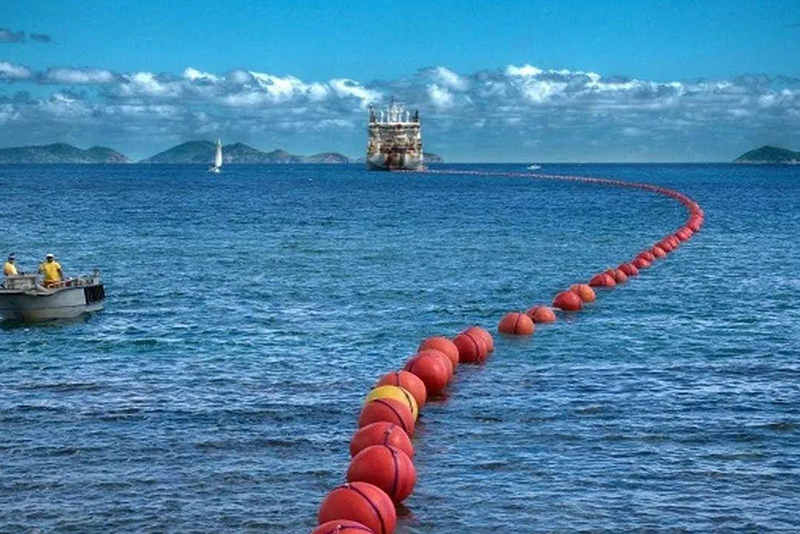
The ship needs to carry a lot of fiber optic cables. At present, the most advanced fiber optic cable ship can transport two thousand kilometers of fiber optic cable and place it at a speed of two hundred kilometers per day.
In the deep sea area, the laying ship first uses underwater detectors and underwater remote control devices for underwater monitoring and adjustment to avoid uneven places on the seabed and a lot of rocks.
After completing the route survey, it is necessary to carry out optical cable transmission. At this time, the excavator began to work.
The excavator is pulled forward by the laying machine. In addition to sinking the balanced optical cable into the seabed, its work is divided into three steps:
The first step is to use high-pressure washing to form a trench at a depth of about 2m under the seabed.
The second step is to put the optical cable into the groove through the cable hole.
The third step is to spread sand on the nearby optical cable.
Therefore, the process of burying optical fibers is surveying and cleaning, laying underground cables, and burying and protecting them.
Want more information on C&DF Test Set, C&DF Test Set, C&DF Test Set? Feel free to contact us.